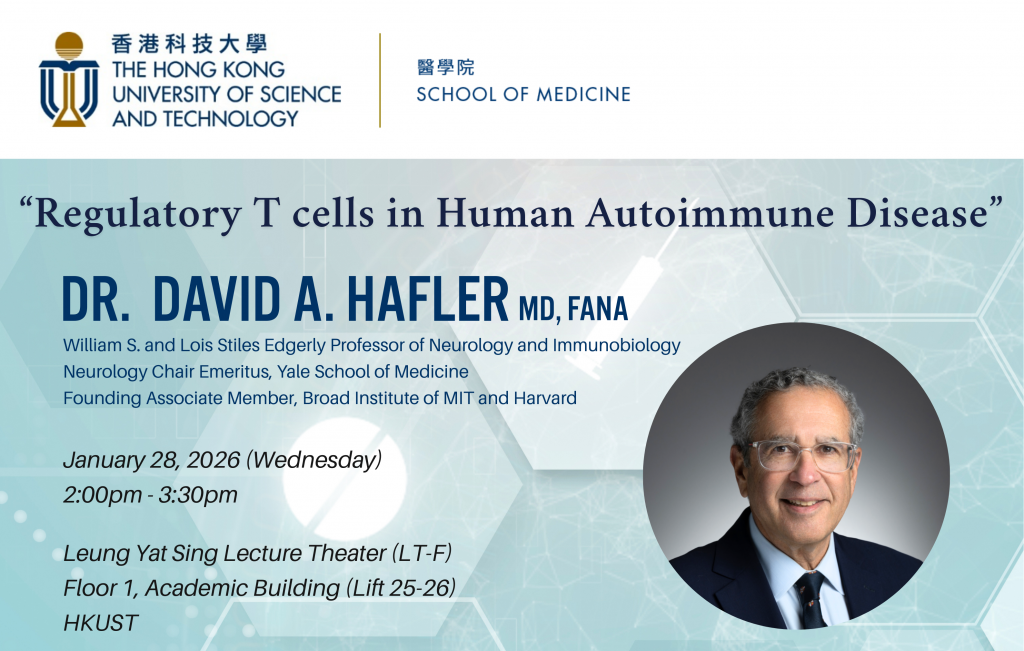
Regulatory T cells in Human Autoimmune Disease
Supporting the below United Nations Sustainable Development Goals:支持以下聯合國可持續發展目標:支持以下联合国可持续发展目标:
In this talk, Dr. Hafler will discuss how Tregs mediated human autoimmune diseases. Loss of immune regulation is thought to underlie human autoimmune diseases in genetically susceptible individuals. Based on the discovery of FoxP3+ regulatory T cells (Tregs) in mice, we first identified Tregs in humans some 25 years ago and went on to show that they are defective in the human autoimmune disease multiple sclerosis. Transcriptomic and epigenomic profiling revealed upregulation of a PRDM1 isoform (PRDM1-S) that induced SGK1, a salt sensing kinase leading to destabilization of Foxp3 and Treg dysfunction. This aberrant PRDM1-S/SGK1 axis is shared among other autoimmune disease. Finally, B cell depletion is highly effective in treating MS by inducing Treg function with loss of autoreactive T cells.
William S. and Lois Stiles Edgerly Professor of Neurology and Immunobiology
Neurology Chair Emeritus, Yale School of Medicine
Founding Associate Member, Broad Institute of MIT and Harvard
For enquires, please contact Ms. TAM at 3469 2465.