Sentimental Republic: Chinese Intellectuals and the Maoist Past
Supporting the below United Nations Sustainable Development Goals:支持以下聯合國可持續發展目標:支持以下联合国可持续发展目标:
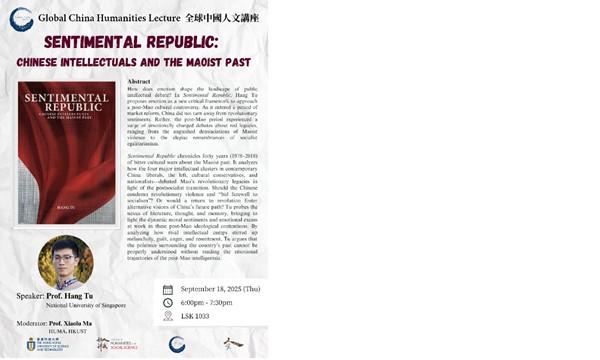
Speaker: Prof. Hang Tu, National University of Singapore
Moderator: Prof. Xiaolu Ma, HKUST
Date: September 18, 2025 (Thu)
Venue: LSK 1033, HKUST
Abstract
How does emotion shape the landscape of public intellectual debate? In Sentimental Republic, Hang Tu proposes emotion as a new critical framework to approach a post-Mao cultural controversy. As it entered a period of market reform, China did not turn away from revolutionary sentiments. Rather, the post-Mao period experienced a surge of emotionally charged debates about red legacies, ranging from the anguished denunciations of Maoist violence to the elegiac remembrances of socialist egalitarianism.
Sentimental Republic chronicles forty years (1978–2018) of bitter cultural wars about the Maoist past. It analyzes how the four major intellectual clusters in contemporary China—liberals, the left, cultural conservatives, and nationalists—debated Mao’s revolutionary legacies in light of the postsocialist transition. Should the Chinese condemn revolutionary violence and “bid farewell to socialism”? Or would a return to revolution foster alternative visions of China’s future path? Tu probes the nexus of literature, thought, and memory, bringing to light the dynamic moral sentiments and emotional excess at work in these post-Mao ideological contentions. By analyzing how rival intellectual camps stirred up melancholy, guilt, anger, and resentment, Tu argues that the polemics surrounding the country’s past cannot be properly understood without reading the emotional trajectories of the post-Mao intelligentsia.
Bio
Hang Tu is Assistant Professor of Chinese Studies at the National University of Singapore. His research focuses on the cultural politics of emotion in modern and contemporary China. His monograph, Sentimental Republic: Chinese Intellectuals and the Maoist Past (Harvard University Asia Center, 2025), proposes emotion as a new critical framework to approach post-Mao intellectual polemics. In addition, his journal articles have appeared in Critical Inquiry, The Journal of Asian Studies, Modern Intellectual History, MCLC, and Prism.