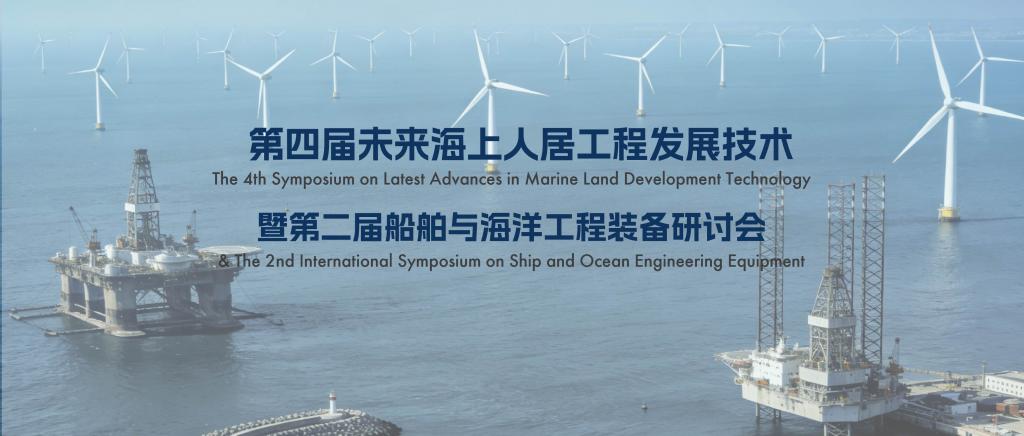
The 4th Symposium on Latest Advances in Marine Land Development Technology & The 2nd International Symposium on Ship and Ocean Engineering Equipment 第四届未来海上人居工程发展技术暨第二届船舶与海洋工程装备研讨会
Supporting the below United Nations Sustainable Development Goals:支持以下聯合國可持續發展目標:支持以下联合国可持续发展目标:
The 4th Symposium on Latest Advances in Marine Land Development Technology & The 2nd International Symposium on Ship and Ocean Engineering Equipment
To address the practical challenges faced by global marine development and sustainable development, this symposium will focus on the two core themes of “Future Maritime Habitat Engineering Technology” and “Ship and Ocean Engineering Equipment”. It will set up sub-forums to gather experts from academia and industry for in-depth discussions on key technical problems and engineering solutions.
The “Future Maritime Habitat Engineering Technology” direction focuses on marine space comprehensive utilization, modular and standardized design of floating structures, climate adaptability and coastal resilience enhancement, marine aquaculture, full lifecycle construction and intelligent O&M of facilities, and energy-water-food self-sustaining technologies supporting offshore community operations. The “Ship and Ocean Engineering Equipment” direction focuses on green low-carbon and zero-carbon technologies, smart ships and autonomous navigation systems, deep-sea multi-functional engineering equipment innovation, floating renewable energy platform structures and mooring, and marine equipment intelligent manufacturing and digital twin technologies.
Based in the Guangdong-Hong Kong-Macao Greater Bay Area, relying on Nansha’s geographical advantages and marine industrial cluster foundation, the conference gives full play to the role of the “International Ocean Industry Development Alliance (Nansha)” as an open collaboration platform. It not only serves regional marine science and technology innovation and industrial upgrading but is also committed to promoting global marine science and technology dialogue and cooperation. By promoting substantive, cross-regional industry-university-research collaboration, accelerating the transformation of innovative achievements from laboratories to global application scenarios, the conference aims to provide technical paths and cooperation paradigms for addressing climate change and expanding the sustainable use of marine space, assisting in the sustainable utilization and resilient development of the global ocean.